he ball loops high toward the far post, and two players launch themselves at it with no regard for their own safety. That split-second collision—skull against leather, elbow against temple—is headball in its purest。most brutal form. I watched a Sunday league match last month where a center-back named Marcus, a 34-year-old with a day job in insurance, took a headball to the back of the skull while tracking a clearance. He finished the game. The next morning, he couldn't remember the second half. That's the trade-off nobody puts on a highlight reel.Headball isn't just heading the ball;
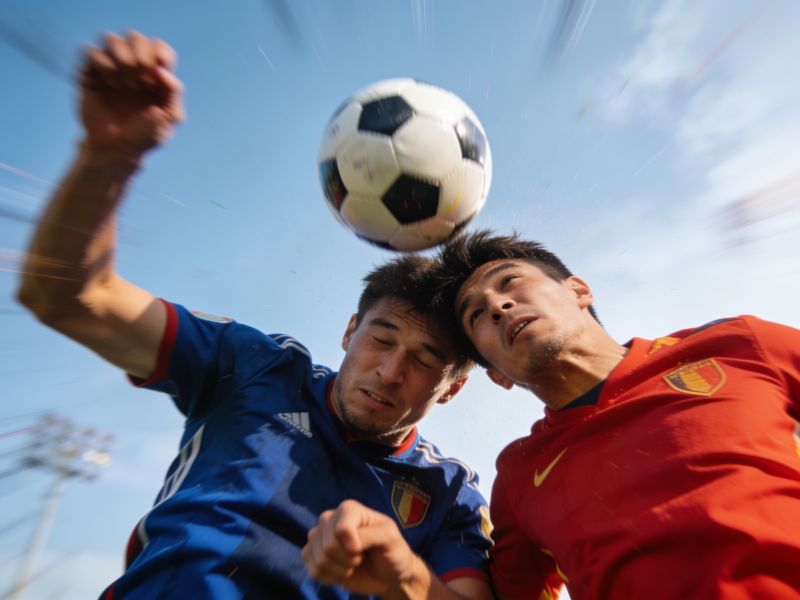
it's the entire aerial contest—timing, leverage。and the willingness to absorb contact. Biomechanically, a properly struck headball can generate forces exceeding 20 g's of linear acceleration on the brain. A 2019 study of Scottish professional footballers found that former players were three and a half times more likely to die from neurodegenerative disease than the general population. The sample size was small, and the researchers were careful about causation. But anyone who has played the game knows the drill: you head the ball because the alternative is letting your marker win the duel.Watch a Premier League defender during a defensive headball. He doesn't jump straight up. He jumps late, into the attacker's blind side, and uses his arms for separation—subtle pushes that referees rarely call. The best in the air, like Virgil van Dijk。average fewer than two aerial duels lost per ninety minutes. That's not luck. It's reading the flight path a half-second before contact and positioning the body so the headball becomes a controlled clearance, not a desperate deflection. I spent a season charting aerial duels for a semi-pro club, and the pattern was clear: defenders who timed their jumps late won 68% of headball contests;those who jumped early won just 41%. Timing beats height.
Youth heading bans are spreading for a reason. The United States Soccer Federation eliminated heading for players under ten in 2015, and Scotland banned heading in training for under-12s in 2020. Critics call it overreach. I think they miss the point. A child's neck muscles can't stabilize the skull against a driven ball, and the cumulative effect of hundreds of headballs in training sessions is a risk no parent should accept without evidence. The professional game will adapt—probably with rule changes on substitutions for head injuries and stricter limits on training repetitions. The headball itself won't disappear. It's too central to the sport's drama. But the way we teach it。and the way we count the cost, is already shifting.