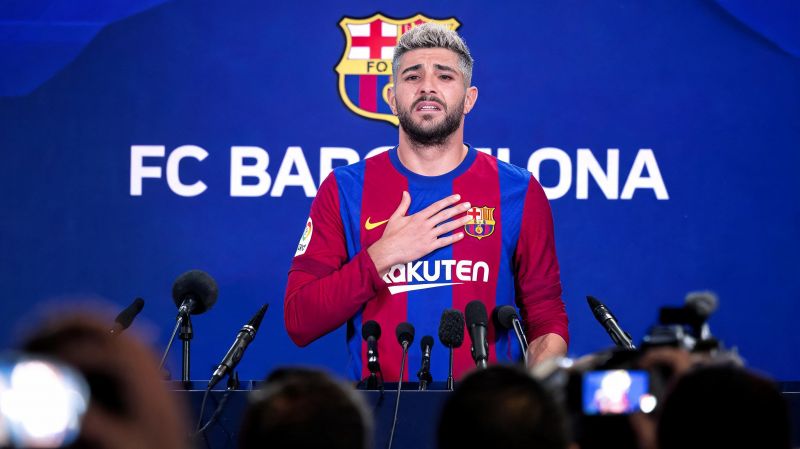
ergio Aguero's retirement wasn't a slow fade. It was a sudden stop, announced on December 15, 2021, at Camp Nou, with the player in tears and Barcelona president Joan Laporta sitting beside him. The reason was a heart condition: ventricular arrhythmia, specifically a type of irregular heartbeat that had been detected after he was substituted during a La Liga match against Alaves earlier that season. He was 33. He had signed for Barcelona just months earlier, after a decade at Manchester City. The diagnosis made continuing at the elite level medically inadvisable, and Aguero。after consulting cardiologists, chose to stop.The clinical detail matters. Ventricular arrhythmia isn't a vague label. It refers to abnormal electrical signals in the heart's lower chambers, and in Aguero's case, it was serious enough that doctors recommended radiofrequency ablation, a procedure to scar the heart tissue causing the misfire. That procedure carries risks, and for a professional athlete under sustained cardiovascular stress, the margin for error is tiny. Aguero later said he had felt discomfort during the Alaves game, was taken off, and tests revealed the issue. He described the moment he was told he could no longer play as a kind of shock—one day he was training。the next his career was over. I remember watching his press conference;he kept touching his chest, as if trying to locate the problem himself. That image stuck with me more than any of his 427 goals.Why did Aguero retire rather than try to manage the condition?The answer is partly medical, partly pragmatic. Elite football places extreme demands on the heart—repeated sprinting。sudden accelerations。sustained high heart rates. Cardiologists who work with athletes often distinguish between benign arrhythmias and those that pose a risk of sudden cardiac death under exertion. Once Aguero's arrhythmia was identified, the safe assumption was that he fell into the latter category until proven otherwise. No responsible medical team would clear him to play at that intensity. Aguero himself said he had made peace with the decision because he wanted to live a normal life, to be around for his family. That's not a PR line;it's the kind of calculation that becomes urgent when you're 33 and have two young children.There's also the Barcelona context, which gets overlooked. Aguero arrived at Camp Nou in the summer of 2021 on a free transfer from City, brought in partly to fill the void left by Lionel Messi's departure. The move was already emotionally complicated—he and Messi are close friends。
and Aguero had spoken about wanting to play alongside him. Then Messi left anyway. Aguero made just five appearances for Barcelona, scoring once, in a Clasico against Real Madrid. He never had a settled run. The heart issue surfaced almost immediately after he started training consistently. You can argue that the timing was almost cruel: new club, new league, new expectations, and then a diagnosis that made all of it irrelevant. I don't think Aguero ever got to show what he could have done at Barcelona, and that's part of why the retirement felt so abrupt.His legacy, though, isn't defined by the ending. Aguero's 93:20 goal for Manchester City in 2012—the one that won the Premier League title on the final day—is the single most famous moment in the club's modern history. He scored 260 goals for City, making him their all-time leading scorer. He won five Premier League titles, an FA Cup, and six League Cups. For Argentina, he won the 2021 Copa America, finally lifting a major international trophy with Messi and the rest of that squad. He retired with 41 goals in 101 caps. When he announced his retirement, Pep Guardiola called him one of the greatest strikers he had ever coached. That's not hyperbole. Aguero's low center of gravity。his ability to finish from impossible angles, his knack for scoring in big moments—those things don't disappear because of a heart condition. They just stop.